Understanding the Power of Settings and Options Icon Sets in Modern Design
In today’s digital age, visual elements play a crucial role in communication, especially in web design, mobile applications, and marketing materials. Among these visual components, settings and options icon sets stand out as essential tools for conveying functionality and user control. These icons are not just decorative; they serve a practical purpose by helping users navigate through various features and configurations. In this article, we’ll explore the significance of settings and options icon sets, their applications, and why they are indispensable in modern design projects.
What Are Settings and Options Icon Sets?
A settings and options icon set is a collection of visually consistent icons that represent different functions related to configuration, customization, and user preferences. These icons are often designed as glyphs, which are simple, scalable, and easy to recognize. They can be used across multiple platforms, including websites, mobile apps, presentations, and printed materials.
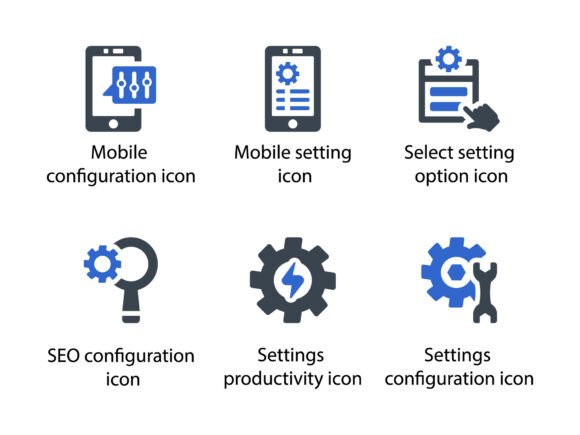
One popular example is the Beautifully Designed Glyph Icon, which combines elegance with clarity. This type of icon is ideal for designers who want to maintain a professional look while ensuring usability. The set typically includes icons such as Mobile Configuration, Mobile Setting, Select Setting, SEO Configuration, and Set Productivity. Each icon serves a specific purpose, making it easier for users to understand what each function entails at a glance.
The Importance of Icon Sets in Design
Icons are more than just symbols—they are a form of visual language that transcends barriers. In the context of settings and options, these icons help users quickly identify and access important features without relying on text. This is particularly useful in environments where space is limited, such as mobile interfaces or infographics.
For instance, when designing a mobile application, using a Settings icon allows users to easily find the menu where they can adjust app preferences. Similarly, an SEO Configuration icon can be used in dashboards or content management systems to indicate where users can optimize their website for search engines.
Moreover, icon sets ensure consistency in design. When all icons follow a similar style, they create a cohesive look that enhances the overall user experience. This is especially important in presentations or promotional materials, where visual harmony is key to capturing attention and conveying information effectively.
Applications Across Different Industries
The versatility of settings and options icon sets makes them valuable in various fields. Let’s take a closer look at how they are used in different contexts:
Web and Mobile Development
In web development, icons are used to guide users through complex interfaces. For example, a Settings icon might appear in the top navigation bar, allowing users to access account settings, privacy controls, or notification preferences. In mobile development, these icons are often placed in menus or toolbars, providing quick access to essential functions.
Additionally, SEO Configuration icons can be integrated into content management systems (CMS) or analytics dashboards. These icons help users understand where they can make adjustments to improve their website's visibility on search engines.
Printed Materials and Presentations
Even in printed materials, such as brochures, posters, or reports, icons add visual interest and clarity. A Mobile Setting icon, for example, could be used in a guide explaining how to configure a mobile device. Similarly, a Set Productivity icon might appear in a presentation about time management tools or workflow optimization.
These icons also enhance infographics, where data visualization is key. By incorporating select setting or configuration icons, designers can illustrate processes or steps in a way that is both informative and engaging.
Business and Education
In the business world, settings and options icons are commonly found in software applications, project management tools, and customer relationship management (CRM) systems. They help users customize their workflows, manage preferences, and access advanced features. For example, a Settings icon in a CRM could lead to a section where users can adjust email templates, set up automation, or define user roles.
In education, these icons are useful in e-learning platforms, where students and educators need to navigate through course settings, assignments, and progress tracking. A Mobile Configuration icon might appear in a mobile learning app, guiding users to adjust settings for offline access or notifications.
Choosing the Right Icon Set for Your Project
When selecting a settings and options icon set, it’s important to consider the following factors:
- Style and Consistency: Choose icons that match the overall design aesthetic of your project. Whether you prefer minimalist, flat, or outlined styles, consistency is key to maintaining a professional look.
- Scalability: Ensure the icons are available in multiple formats, such as EPS, SVG, and PNG, so they can be used across different platforms and resolutions.
- Clarity and Recognition: The icons should be easily recognizable, even at smaller sizes. Avoid overly complex designs that may confuse users.
- Customization Options: Some icon sets allow for color variations, which can help align with brand colors or themes.
By selecting the right icon set, you can enhance the usability and visual appeal of your design projects, whether they are digital or physical.
Conclusion
Settings and options icon sets are more than just visual elements—they are powerful tools that enhance user interaction and streamline navigation. From mobile configurations to SEO settings, these icons play a vital role in modern design, making it easier for users to access and manage features. Whether you’re developing a website, creating a presentation, or designing promotional materials, incorporating a well-designed icon set can elevate your work and improve the overall user experience.
As technology continues to evolve, the importance of clear and intuitive design will only grow. By understanding the purpose and applications of settings and options icons, you can make informed decisions that benefit both your audience and your projects.